
It’s a well known secret among sewists in Kitsilano that we carry a variety of notions. While fabric stores that supply zippers are kind of limited in British Columbia, we are actively expanding our stock to ensure our neighborhood has access to the notions they need. Our team has been hard at work adding these notions to our online fabric shop so that it is easier to get sewing supplies that aren’t from big box stores in Canada.
Zippers
Our Collection of Deadstock Zippers featuring a variety of lengths and styles.
If you are new to sewing and just learning how to sew zippers it can be scary to get started. So as professional sewing teachers we put together a beginners guide to sewing zippers so you understand the basics of what your looking for and doing when starting your zipper journey.
The types of zippers
The first thing you need to know is that there are 3 different types of use cases for a zipper. Often when we get new sewist in the studio asking for a zipper, they are looking to make a pillow case or boxy zipper pouch and they just ask if we have zippers, so it is important to know what kind of zip you need.
Non-Seperating zippers

Non-Separating Zippers | Deep Purple, 7″
Non-separating zippers ideal for pouches and skirts
If you are making something that is closed and needs to stay together then you would be using a Non-seperating zipper. These zippers are best for zipper pouches, pillow cases, skirts, and dresses. These are also the zippers used in jeans or pants.
You can have a Non-Seperating that is open on one side, or one that is closed on both sides.
These zippers tend to be the most beginner friendly. (We use them a lot in our kids sewing workshops that we host during spring break, summer break, winter break, or Pro-D days, at our in person classes in Vancouver, BC.)
Separating Zippers
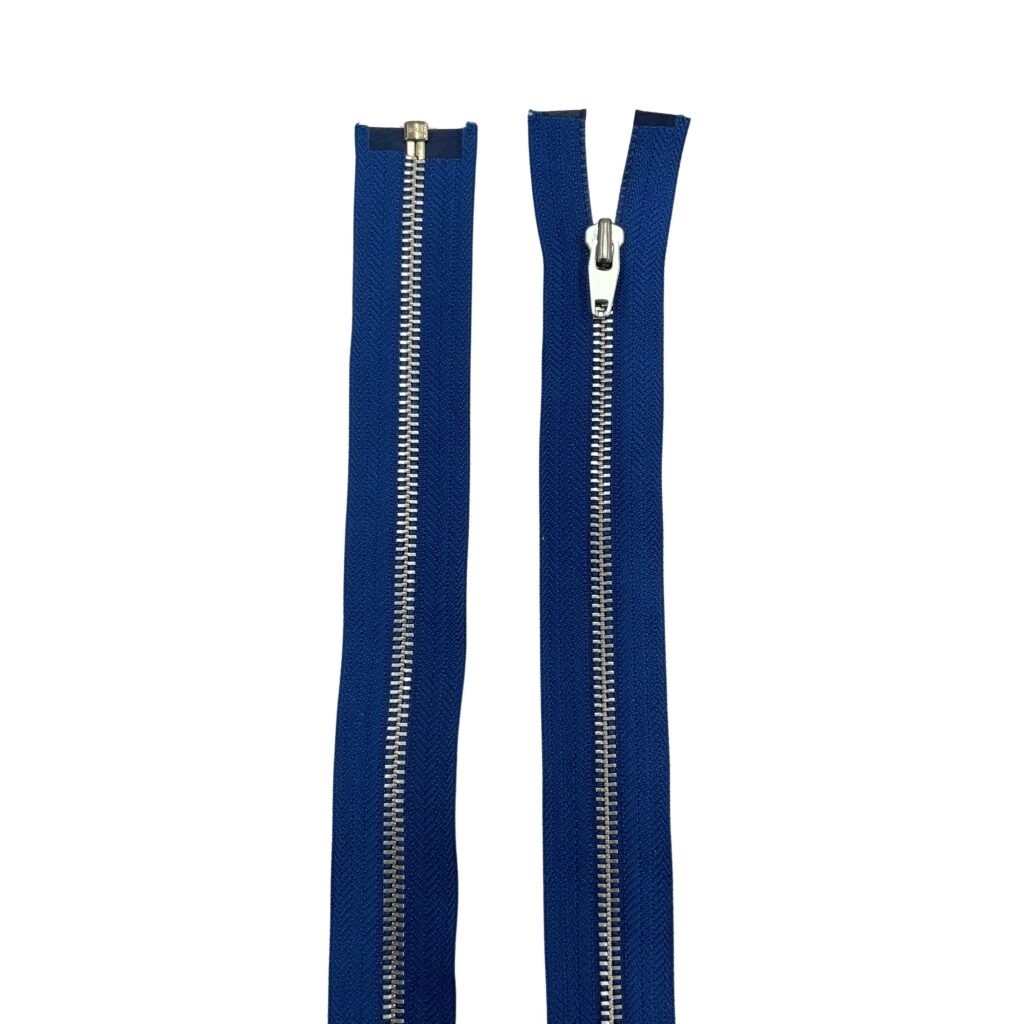
14″ (35cm) Separating Zippers | Navy
Length: 14″ (35cm)
Separating zippers ideal for jackets and hoodies.
If you are making a jacket, or something that needs to come completely apart then you would need a separating zipper. These are common on coats and other outerwear.
Because your zipper completely separates this can be trickier to sew since you have to make sure it lines up properly. I generally don’t suggest this until you have sewn a non-separating zip.
Invisible Zippers
These zips are the most advanced zippers in my opinion. Invisible zips have the teeth fold back so that you and stitch right up against them making your zipper fit seamlessly into your seam.
These are most commonly used in dresses, skirts, fancy pillowcases, comforters, and dress pants.
These are all made with nylon coil teeth, which can be prone to breaking because the plastic isn’t as durable as other zipper options. This means that it is pretty common for tailors and dress makers to have to repair/ replace these.
Zipper Materials
For both separating and non-seperating zippers these can come in plastic or various types of metals.
Depending on what you are making you may want to choose one type of zip over the other.
Plastic zippers

Plastic zippers are most commonly recommended for sewing projects that may end up getting wet as they will not rust. The downside to this is that it is easier to crush the plastic teeth or accidentally rip them out, meaning a zipper replacement may need to happen eventually.
Often plastic zippers will be used for make up bags, water resistant jackets and coats, or other hiking back packs.
Metal zippers

16″ (40.5cm) Separating Zippers | White Tape, metal teeth
Separating zippers ideal for jackets and hoodies.
In general metal zippers are more durable. There are many different metals used for zippers but for the most part it is an aesthetic choice. If something is going to get a lot of movement I would opt to use a metal zipper, or if something needs to be very hard wearing.
Leather goods, jeans and work pants, and outerwear is what I tend to use metal zippers for.
This of course is a very basic overview of zippers, if you are looking for more zipper sewing tips and tricks you can view my whole ‘Making friends with Zippers’ series on Youtube, Tiktok, and Instagram.
Keep an eye out for more indepth beginner sewing tutorials in the future.