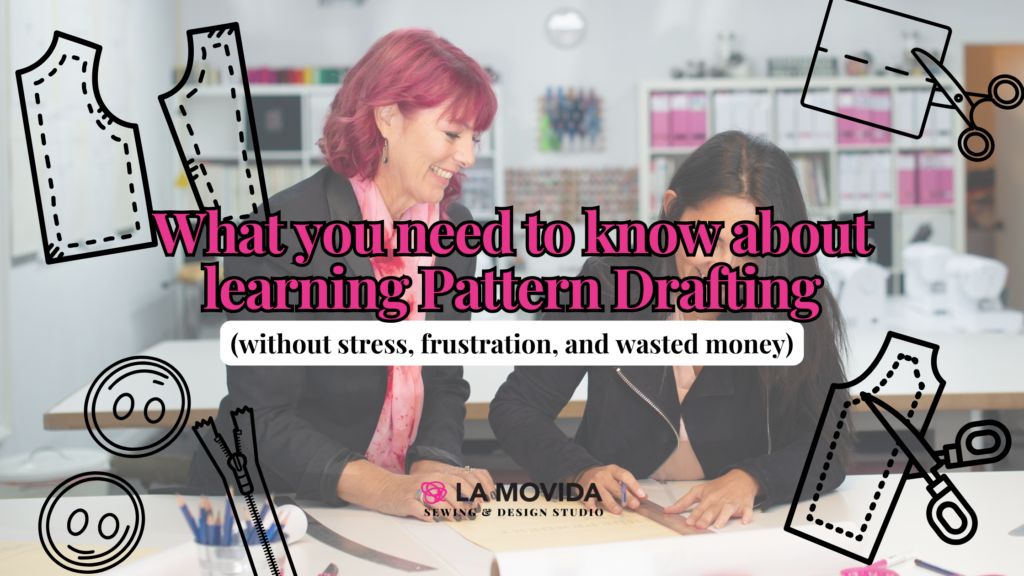
While there are tons of fashion schools out there to teach you every facet of pattern drafting for product development. There are minimal programs that will teach you pattern drafting to fit your own body.
If you have been sewing from scratch for quite some time now you may be ready to take the next step to developing your own clothing and patterns.
This is a common thing we teach in our private lessons because often hobby sewist have a specific style and garment in mind, and being able to draft that pattern in a way that fits your body is the most ideal.
Here are the questions I would ask when trying to evaluate your pattern drafting needs:
- What do you want to make?
In general I wouldn’t learn how to pattern draft if you just wanted to make simple or stretchy clothes. If this is the case then I would sooner opt to teach you alterations and tailoring techniques on existing patterns.
- What is your current sewing experience?
Pattern Drafting in many ways is the pinnacle of garment sewing. If you do not yet understand how to sew together any garment from scratch, start there. If you learn how to pattern draft too soon in your sewing journey it will often result in a lot of confusion as things may not make since on why we do what measurements and how that works in a flat pattern.
It’s like wanting to design a sky scraper before learning how to make a table structurally sound.
- If you’ve passed on those two questions, my final one would be, are you wanting to pattern draft for other people, or just yourself?
There are many methods to learn how to pattern draft.
Some like Helen Armstrong’s pattern drafting method are the most complex, taking measurements from all over your body and requiring precision to get it right.
Others are way more simple, like Dusan’s pattern drafting method which is basically a connect the dots.
Either way you will need to make a mock up and make alterations to your pattern because bodies are not flat pieces of paper and numbers and need some organic tinkering.
BUT Dusan’s is more of a one and done type deal, whereas Armstrong’s method works for any bodies no matter how big or small.
I think it’s also knowing what you have the patience for.
We like to create a flexible curriculum here because there are so many ways to learn one thing and complete your sewing goals but everyone may learn differently, have a different timeline, and require different tools and tricks to get what they need.
After reading this blog post, you are still interested in learning how to pattern draft, we offer private lessons on custom blocks or workshops to learn the basic methods here in our Vancouver sewing studio.