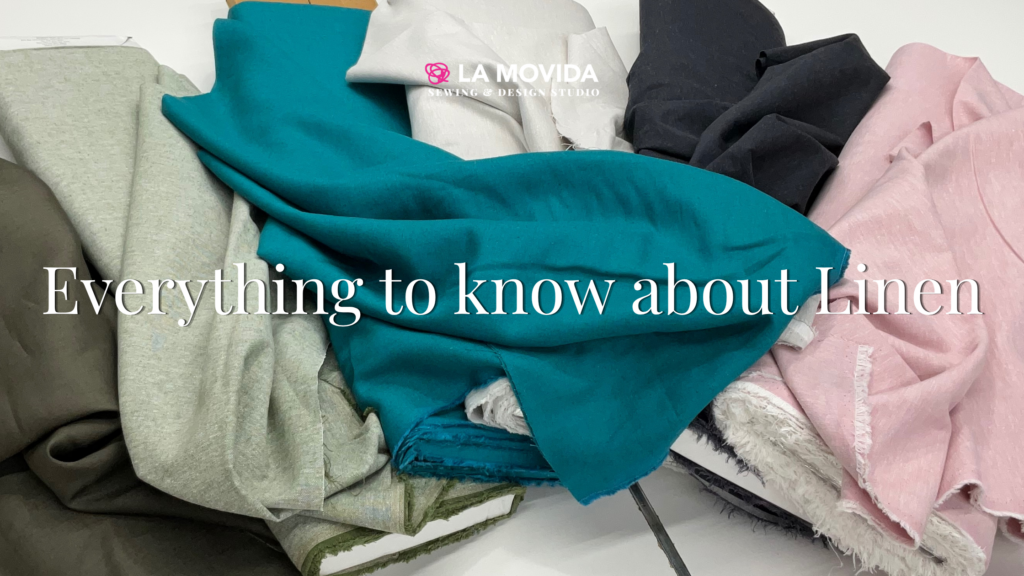
I actually wasn’t a fan of Linen when I first started sewing, I saw it as a rough fabric and I had no clue why there were so many people who preferred linen over all other fabrics.
But of course the more I learned about linens properties and the more I worked with it as a seamstress, I began to understand why it had such a serious cult following.
Linen is one of the oldest fabrics, due to its long ‘bast’ fibers it made it easier to weave. iI’s light weight, breathability, and overall versatility made it useful across the globe.
So let me share a bit about the properties of linen, what it is best suited for, and the sewing and care tips I know to optimize the experience of your linen.
About Linen
There is a bit of a misconception with linen, often when it is first woven it is quite rough but nowadays they use chemical processing to help soften the fibers. If you have a rougher linen, it will naturally soften with use, similar to how raw denim does.
Linen is super breathable and absorbent making it quick drying which is why it is great in the summer, as well as for bedding.
Lots of people like it because it is biodegradable but you have to watch out for fibers that are blended if you’re going to be more sustainable.
Linen isn’t super strong, which is why it’s often blended with other fibers, like cotton or rayon.
When having linen in your wardrobe you don’t want to leave it folded for too long because it can crack on the creases, heat can also make linen brittle so I would avoid drying it.
Types of Linen
When choosing a fabric for your sewing project it is important to keep in mind fabric weight.
Light-weight linens are very drapey, commonly used for handkerchiefs, dresses,
Medium to Light weight linen is used as sheeting for bedding, table cloths, dresses, and dress shirts.
Medium weight linen is common in boat or palazzo pants, toweling, and some table cloths.
Medium to Heavy weight linen is used in pillow cases, upholstery, and suitings.
Heavy weight linen is used for butchers cloth, work wear, and restaurant uniforms. It is quite rugged and will initially be rough to touch.
There are also a handful of linen blended fabric types to understand.
Linen Silk is the most luxurious, having a beautiful drape and hand. The silk studio on Grandville island has hand woven fabrics and yarns made from this.
Linen Cotton tends to be more medium weight and is blended to help with strength and some warmth, making it great for clothes in a more temperate climate.
Linen Rayon and Linen polyester are blended for affordability and strength.
Linen Sewing tips
Linen is typically a dream to sew with but there are a couple things to note!
Heat on your Iron!! There is a linen setting on most irons for a reason, linen isn’t a big fan of high heat, not only can it cause the linen to deteriorate but it can also make some of the dyes in the linen go. I’m only telling you this because I am prone to forgetting these things.
Cutting out –
Linen is pretty well known for being shifty so take your time cutting out, especially if you are making clothes for yourself, you don’t want to accidentally cut it off grain. See my blog post on grainline to learn more.
Linen Sewing Inspiration
Here at the sewing studio we use linen most often in our Palazzo pant workshop! It makes a beautiful breathable pant and comes in gorgeous colours.
I always like to include a couple free sewing patterns for anyone who is trying to keep things a little more cost effective. It is important to note that free sewing patterns aren’t often the most well tested so maybe make a mock up out of an old bed sheet first.
For beginners, an apron is always a go too, this one is quite popular!
Linen is rarely mixed with stretch because of it’s lack of strength so when you are looking for shirt, pant, or dress patterns most of the time they will be either loose fitting or have some sort of closure.
Mood fabrics gets around the loose fit by adding a belted look to this top –
But linen is very well loved in the sewing community making it a fabric that a lot of pattern designers use so here are some other really popular ones that are worth checking out!
Loose and flowy dresses are well suited for linen –
https://peppermintmag.com/product/wide-strap-maxi-dress/
But they can also be more fitted using elastic
https://www.etsy.com/listing/1761566878/elastic-waist-milkmaid-dress-daisy-frock
One of our most requested patterns to draft is some sort of linen jumpsuit or playsuit like this one
https://peppermintmag.com/sewing-school/playsuit
But mood fabrics has one similar for free!
https://blog.moodfabrics.com/the-palm-jumpsuit-free-sewing-pattern/
Things I would not use Linen for
I feel this section is necessary to help you understand what linen does and does not work for, because no fabric is universal.
Bags – like no way. Linen is not strong enough and you can’t keep it folded for long periods of time. It may make a fun grocery bag short term but it won’t last forever.
Winter clothes – Unless you are a really warm blooded person, linen does not keep you warm! Some hikers do like linen as a base layer to help with thermo regulation though.